
What Is Shilajit? The Himalayan Mountain Resin, Explained

Picture a hot summer day high in the Himalayas. The sun warms a cliff face, and from a crack in the rock a thick, dark, tar-like substance slowly oozes out. It smells earthy and a little smoky. Locals have been scraping it off rocks for centuries. That's shilajit.
If you've seen shilajit resin popping up on your feed and wondered what it actually is, here's the plain-English version – no hype.
Where does the name come from?
"Shilajit" comes from Sanskrit and is often translated as "conqueror of the rocks" – a fitting name for something that literally pushes its way out of mountain stone. It goes by plenty of other names too: mumijo or mumie in Russia and Central Asia, salajeet in Urdu, and in Myanmar it's been called "blood of the mountain".
Where is shilajit found?
The Himalayas (India, Nepal and the Tibetan Plateau) are the best-known source, which is why you'll usually see it sold as Himalayan shilajit. But it's also found in:
The Altai Mountains of Russia and Mongolia
The Caucasus Mountains
The Pamir and Karakoram ranges in Central Asia
Southern Peru, where it's sometimes called Andean shilajit
How does it form?
Shilajit is generally understood to form from plant matter that breaks down very slowly over a long period, pressed and preserved between layers of rock at high altitude. In warmer months it softens and seeps out of crevices, which is when collectors gather it. Even today, scientists don't fully agree on every detail of how it forms – part of what makes it so interesting.
What's actually in shilajit?
Shilajit is a mix of organic and mineral material. It's commonly described as being made up largely of humic substances – including fulvic acid and humic acid – along with naturally occurring trace minerals. The exact make-up varies depending on which mountains it comes from, which is why two shilajits can look, smell and taste a little different.
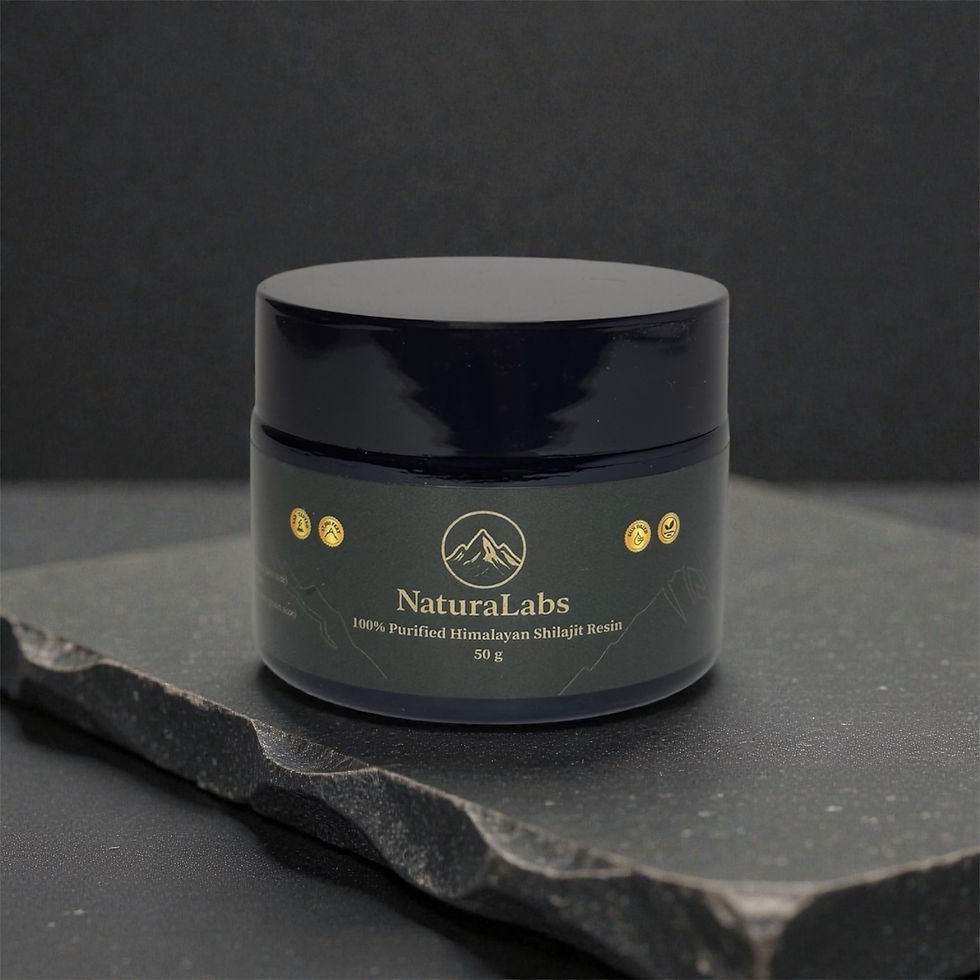
Raw vs purified shilajit
Straight off the rock, raw shilajit contains bits of stone, soil and other debris. That's why it's purified before it's sold: typically dissolved in water, filtered to remove solids, and then slowly reduced back down into a thick resin.
Why lab testing matters
Because shilajit comes from rock and soil, quality control matters. A good supplier should be able to show independent lab testing for heavy metals (like lead, arsenic, mercury and cadmium) and for microbial quality. If a brand can't tell you how its shilajit was tested, that's worth noting.
How is shilajit resin used?
Most people dissolve a small, pea-sized amount of shilajit resin in warm water or herbal tea, once a day, as directed on the label. It has a strong, earthy flavour – think smoky black tea – so some people add it to a drink they already enjoy.
Want to see what purified Himalayan shilajit resin looks like? You can browse the NaturaLabs range at naturalabs.com.au.
This article is general information only and isn't medical advice. NaturaLabs products are not intended to diagnose, treat, cure or prevent any disease. Always read the label and follow the directions for use, and speak with your healthcare professional before starting any supplement – especially if you're pregnant, breastfeeding, have a medical condition or take medication.


Comments